
Technology evolves so rapidly today, more than ever before. One of the most frequently mentioned forms of technology today is AI, or Artificial Intelligence, and if you’ve used voice-assisted devices, recommendation systems, or chatbots; likely, you’ve already had an opportunity to witness it in action.
But there are still so many people out there who ask what AI is and why it’s continuing to grow in importance to today’s digital society.
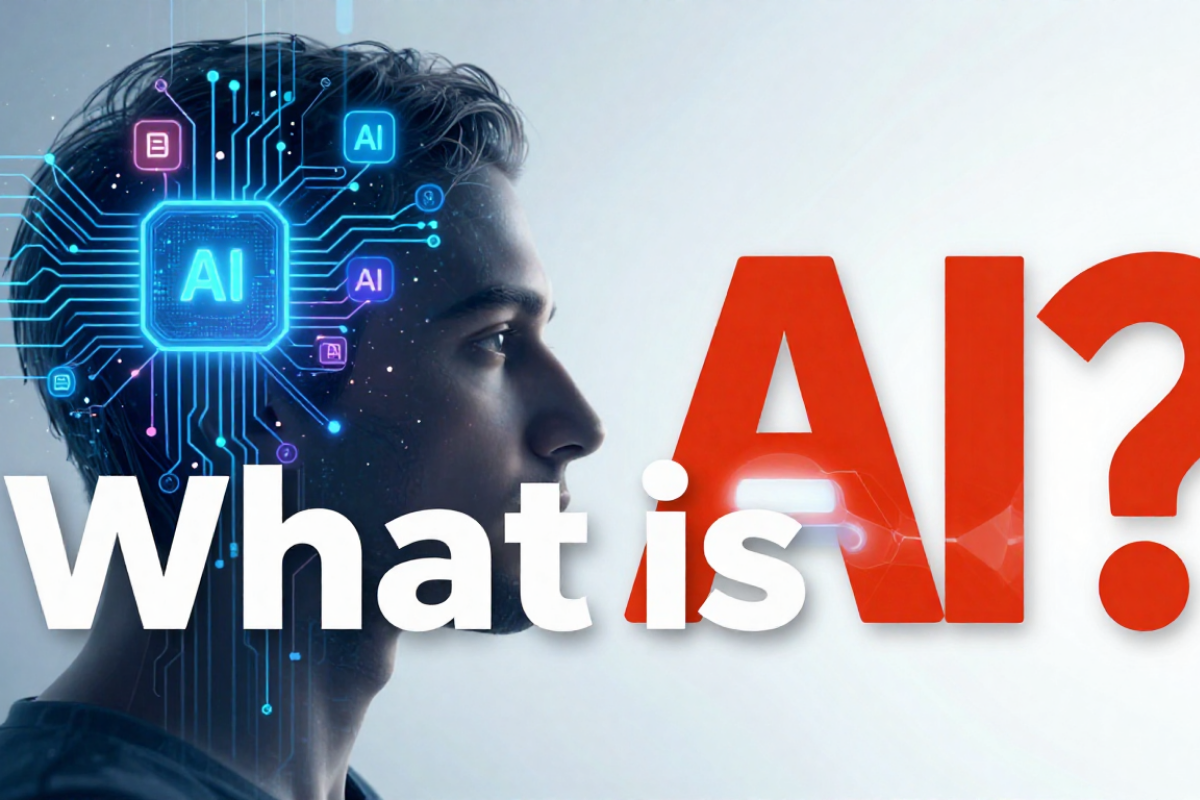
AI is a computer system created to accomplish tasks that normally require human intellect. Learning from data, identifying patterns in data, understanding natural language, and making decisions are all examples of tasks that can be accomplished by the use of Artificial Intelligence.
Rather than following fixed instructions today, AI-based systems are able to learn over time by processing large volumes of high-quality data.
Understanding Artificial Intelligence in Simple Terms
To convey how easy it is to visualize AI, consider that you can create a way for a computer to be able to think and learn like an individual.
Conventional software operates by means of a set of unchangeable rules (i.e., “instructions”) by which the programmer says the program should perform its function. The difference with AI, however, is that it actually “learns” through experience.
For example:
Detecting spam through e-mail software
Recommending films through streaming services
Providing product suggestions through online retailers
All of these will take into consideration the data they have collected based on prior usage by individuals (users) and will change/improve their predictions as they accumulate more data.
This capability for AI to learn based on prior experience is why it is so beneficial to both end users and industry as a whole.
How Artificial Intelligence Works
AI works by combining several technologies and techniques.
The most common components include:
Machine Learning
Machine learning allows computers to learn from data without being explicitly programmed.
Instead of writing rules manually, developers train systems using large datasets.
The system identifies patterns and improves predictions over time.
Many modern Artificial Intelligence systems use machine learning techniques explained in resources by IBM.
Natural Language Processing
Natural Language Processing (NLP) enables machines to understand and generate human language.
This technology powers tools such as:
- Chatbots
- Voice assistants
- Translation systems
Platforms like ChatGPT use NLP to communicate with users.
Computer Vision
Computer vision allows machines to analyze and understand images or videos.
Applications include:
- Facial recognition
- Medical image analysis
- Self-driving vehicles
Types of Artificial Intelligence
AI systems can be categorized into different types based on their capabilities.
Narrow AI
Narrow AI focuses on performing a single specific task.
Examples include:
- Recommendation algorithms
- Virtual assistants
- Fraud detection systems
Most Artificial Intelligence applications today fall into this category.
General AI
General AI refers to machines that can perform any intellectual task that humans can.
This type of AI is still theoretical and under research.
Super AI
Super AI is a hypothetical form of intelligence that surpasses human capabilities.
Although it is often discussed in science fiction, researchers are still far from achieving it.
Real-World Examples of AI
Artificial Intelligence is already integrated into many technologies we use daily.
Examples include:
Smart Assistants
Voice assistants like Amazon Alexa help users control devices and search information.
Recommendation Systems
Platforms such as Netflix recommend movies based on user behavior.
Search Engines
Search engines like Google use AI to deliver relevant search results.
Customer Support
Businesses use Artificial Intelligence chatbots to answer customer queries instantly.
Benefits of Artificial Intelligence
Businesses often integrate Artificial Intelligence into their digital marketing strategies to analyze customer behavior and improve campaign performance.
Automation of Repetitive Tasks
Artificial Intelligence can automate repetitive processes, allowing businesses to focus on strategic activities.
Faster Data Analysis
Artificial Intelligence systems can analyze massive datasets within seconds, helping organizations make better decisions.
Improved Customer Experience
AI-powered systems can personalize recommendations and provide faster customer support.
Higher Efficiency
Businesses can reduce operational costs while increasing productivity.
How Businesses Are Using AI Today
Many companies combine Artificial Intelligence tools with digital strategies like search engine optimization to improve their online visibility.
Some examples of how Artificial Intelligence can be applied in business are as follows:
- Automated customer service
- Predictive analysis
- Personalized marketing
- Fraud detection
- Supply chain optimization
AI-powered automation tools also help businesses improve social media marketing performance by analyzing audience engagement.
AI vs Human Intelligence
| Feature | Artificial Intelligence | Human Intelligence |
|---|---|---|
| Learning speed | Very fast with data | Slower but deeper understanding |
| Creativity | Limited | Highly creative |
| Decision making | Data driven | Experience based |
| Adaptability | Task specific | Highly adaptable |
It is designed to assist humans, not replace them entirely.
Challenges and Limitations of AI
Despite its advantages, it also has challenges.
Data Dependency
AI systems require large datasets for accurate learning.
Ethical Concerns
Issues such as privacy, bias, and job displacement raise important questions.
High Development Cost
Building advanced AI systems requires significant resources and expertise.
The Future of Artificial Intelligence
Artificial Intelligence will continue transforming industries.
Future developments may include:
- Smarter healthcare diagnostics
- Autonomous transportation
- Advanced robotics
- Personalized education systems
As AI technologies evolve, businesses that adapt early will gain a competitive advantage.
Frequently Asked Questions (FAQs)
What is AI in simple words?
AI is a technology that enables machines to learn from data and perform tasks that normally require human intelligence.
Where is AI used today?
AI is used in search engines, smartphones, healthcare, finance, customer support, and many other industries.
Is AI replacing human jobs?
AI automates repetitive tasks but also creates new opportunities in technology and innovation.
Conclusion
Here’s how Artificial Intelligence will influence all aspects of business and life.
When implemented properly, Artificial Intelligence will improve the productivity of organizations through enhanced efficiency and effectiveness.
By understanding how Artificial Intelligence operates, you’ll better prepare yourself and your organization for the following phases of digital transformation.
Businesses that embrace emerging technologies like Artificial Intelligence, automation, and data analytics gain a significant competitive advantage in the digital economy.
If your organization wants to leverage technology for growth, investing in modern digital strategies and data-driven marketing can unlock new opportunities.